22 Mar Easter in Lithuania
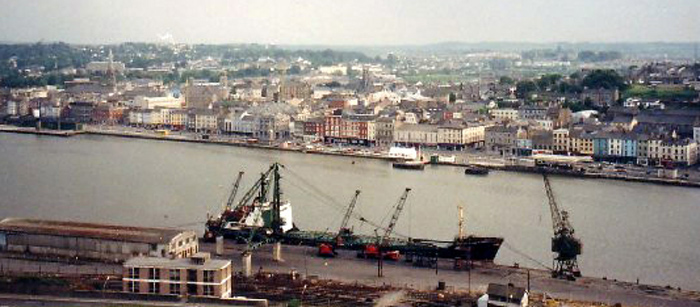
72 % of Lithuanians are members of the Roman Catholic Church. Like many other European countries, Lithuania has several different religions because of its history. (more…)



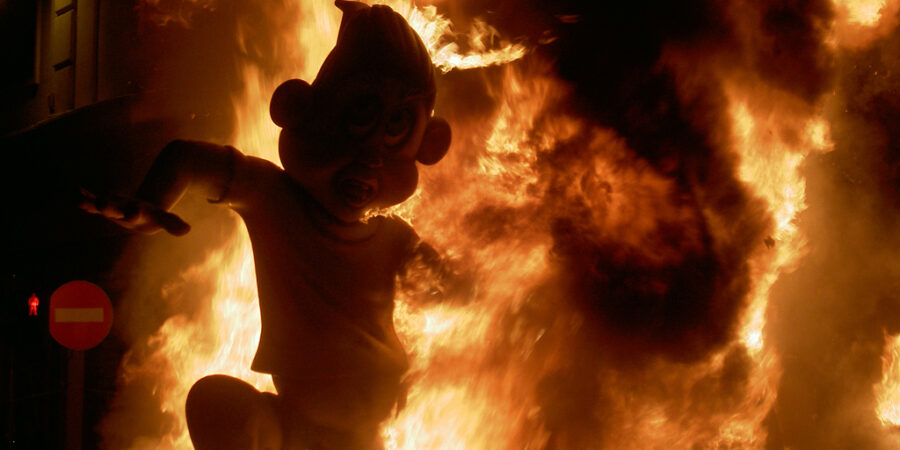
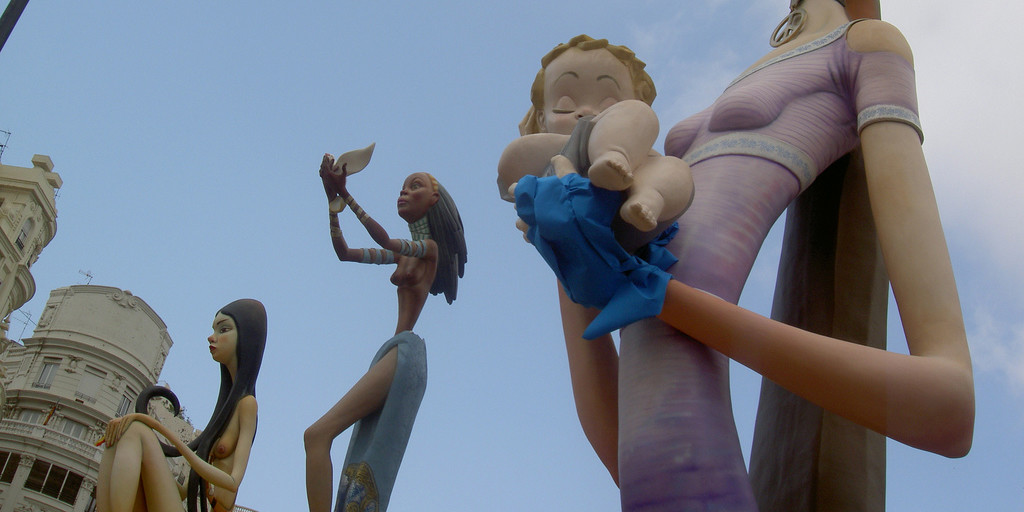
The Fallas festivities in Valencia are an expression of a unique kind of art, that uses large wooden structures covered with painted papier-mâché. The festival has been on UNESCO’s Intangible Cultural Heritage of Humanity list since 2016. It reflects local, national and even international themes in a satirical and ironic way. The festival can have over 370 full-scale fallas. These are monuments featuring “ninots”, large dolls depicting adults that can even be 20 meters tall. There are also 368 fallas depicting children. By the 15th of March, the fallas should be completed and mounted throughout the city, ready to receive visitors. This marks the proper start of the Fallas Festival in the street.
Each day of the Fallas festival begins with the La Despertà, or “the wake-up call”. At 8 AM bands playing brass instruments start marhing down the streets, followed by the fallers, throwing firecrackers. During the nights, viewers can enjoy spectacular fireworks on the night sky.
On the evening of March the 19th, the La Cabalgata del Fuego (The fire parade) takes place. This is a colourful, noisy and tremendous celebration of fire with floats, giant mechanisms, people in costumes, rockets, gunpowder, street performances and music. On the night of the 19th, Valencians burn down their creations, saving only what is known as the “Ninot Indultat”, or the “reprieved figurine”, which becomes a museum piece. It is probably the most popular event internationally and the one that gives the concept of “Fallas Fiesta” its full meaning: the monuments are exhibited in the street to be burnt.
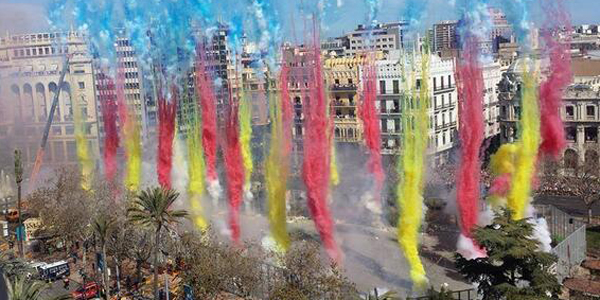
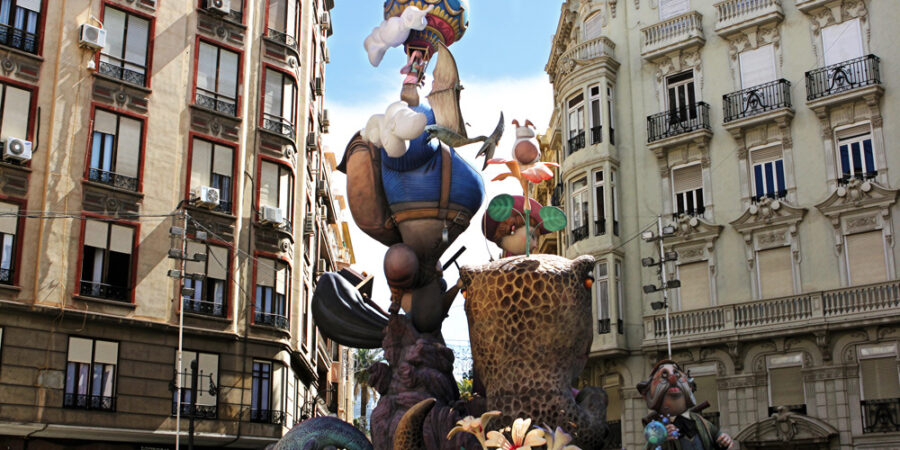
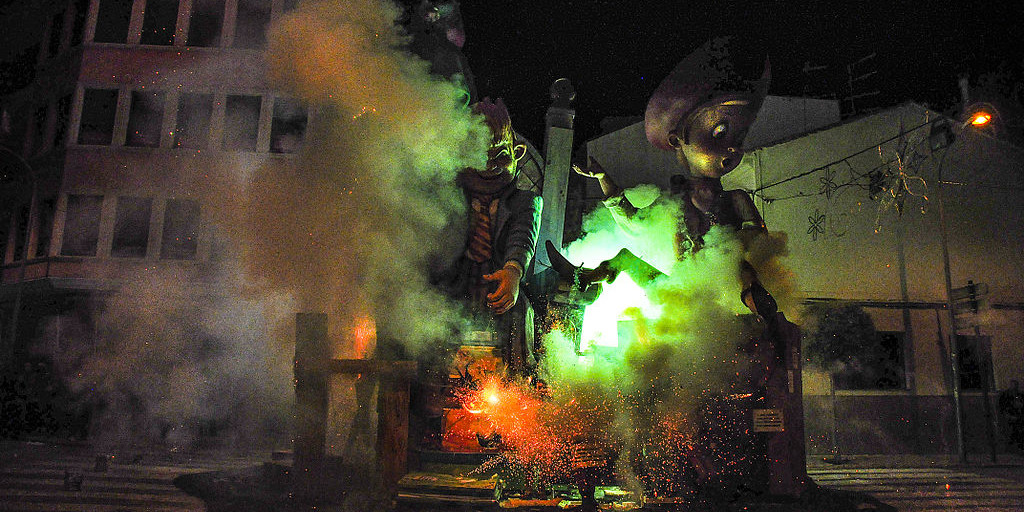
The evening of 19th March La Cabalgata del Fuego (The fire parade) takes place. This is a colourful, noisy and tremendous celebration of fire with floats, giant mechanisms, people in costumes, rockets, gunpowder, street performances, music… On the night of the 19th, Valencians burn down their creations, saving only what is known as the “Ninot Indultat”, or the “reprieved figurine”, which becomes a museum piece. It is probably the most popular event internationally and the one that gives the concept of “Fallas Fiesta” its full meaning: the monuments are exhibited in the street to be burnt.
Pictures: MrCarlos 11, stvcr, FeistyTortilla, keith ellwood .
More info: http://www.fallasfromvalencia.com/
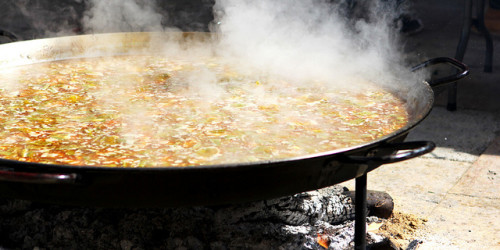
Paella is probably the most famous spanish dish worldwide. It is a rice dish, originating from Valencia. The original paella was made of chicken or rabbit, with saffron. Nowadays varieties of paella can be found all over Spain, many containing seafood.